The "Noisy Neighbor" Cure

The "Noisy Neighbor" Cure: Why Bare Metal is the Standard for Predictable Performance
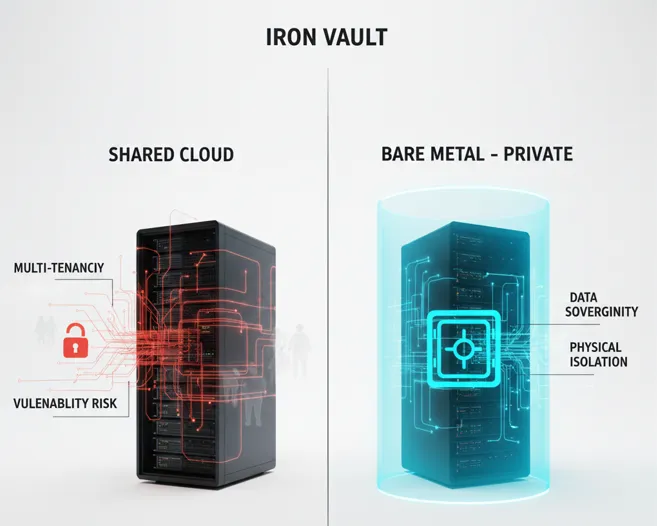
In the world of cloud computing, the term "Noisy Neighbor" isn't just a metaphor—it is a documented technical phenomenon that costs businesses thousands in lost productivity and degraded user experiences. While the public cloud offers unmatched flexibility, it operates on a foundation of multi-tenancy, where your applications share physical hardware with dozens of other users.
When one of those "neighbors" has a spike in traffic or runs a massive data-processing job, your application pays the price. This is where Bare Metal Servers step in as the ultimate cure.
Understanding the "Noisy Neighbor" Effect
In a virtualized environment, a software layer called a hypervisor sits between the hardware and your Operating System. This hypervisor doles out CPU cycles, RAM, and disk I/O to various Virtual Machines (VMs).
The problem? Hypervisors aren't perfect at isolation. If a neighbor’s VM starts hogging the L3 Cache of a processor or saturates the network bus, your VM will experience jitter—unpredictable spikes in latency that make your application feel slow and "laggy," even if your own traffic remains constant.
How Bare Metal Eliminates the Noise
A Bare Metal server is a single-tenant environment. When you rent a bare metal machine, you aren't renting a slice of a server; you are renting the entire physical box. This provides three critical advantages:
1. Zero Hypervisor Overhead
Virtualization requires a portion of the server's power just to manage the virtual machines. In a bare metal setup, this "virtualization tax" is eliminated. Your application has a direct, raw connection to the CPU and memory. For high-frequency trading or real-time gaming, those few milliseconds of difference are the margin between success and failure.
2. Deterministic Latency
For many modern workloads—like AI model training or large-scale database queries—it’s not just about being "fast"; it’s about being consistently fast. Bare metal provides deterministic performance, meaning a task that takes 10ms today will take 10ms tomorrow, regardless of what other customers are doing on the provider's network.
3. Dedicated I/O Paths
Shared storage and shared networking are the most common sources of "noise" in the cloud. On bare metal, the NVMe drives and the network interface cards (NICs) belong exclusively to you. There is no queuing behind another user’s data backup or video render.
Who Needs the Cure?
While a simple blog or small app might thrive in a shared environment, certain industries cannot afford the "noisy neighbor" risk:
- Ad-Tech & Fintech: Where sub-millisecond response times are required for bidding or trading.
- Machine Learning (AI): Training models requires 100% GPU and CPU utilization for weeks at a time; any fluctuation can delay project timelines.
- Multiplayer Gaming: To prevent "lag spikes" that ruin the player experience.
- Big Data Analytics: Processing terabytes of data requires steady, high-speed disk throughput.
Conclusion
The public cloud is great for scaling, but Bare Metal is built for power. By moving mission-critical, high-performance workloads to bare metal, you effectively "buy the house" instead of "renting a room." You gain the peace of mind that comes with knowing your performance is entirely in your own hands, free from the interference of neighbors you’ll never meet.