Bare Metal is Essential for Critical Privacy

Data Sovereignty: Essential for Critical Privacy
In an era of rising cyber threats and increasingly strict data regulations, where your data lives is just as important as how it is encrypted. For industries involving critical communications—such as healthcare, government, and finance—the public cloud’s greatest strength (shared resources) is also its greatest security liability.
This is why "Bare Metal" has become the gold standard for organizations that cannot afford a single byte of data leakage.
The Multi-Tenancy Risk
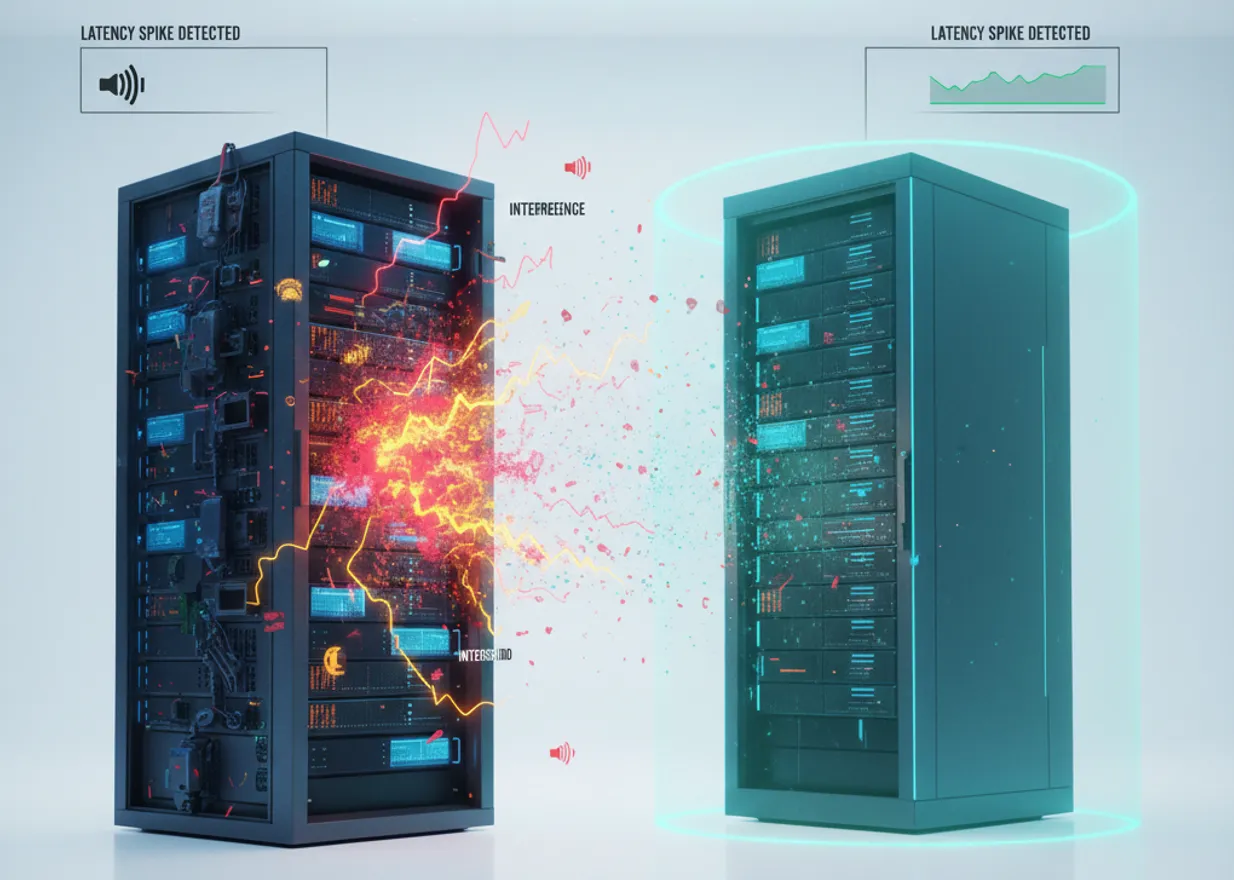
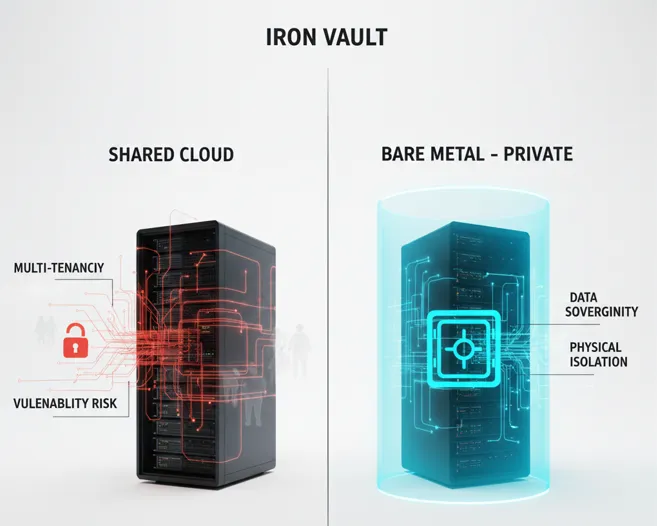
In a standard cloud environment, your data shares a physical hard drive and processor with other companies. While software-level isolation (virtualization) is strong, it is not invincible. Vulnerabilities like "Side-Channel Attacks" (e.g., Spectre or Meltdown) have shown that it is theoretically possible for a malicious "neighbor" to peek into the memory of another virtual machine on the same host.
For critical communications—encrypted messaging, patient records, or legal transcripts—this "theoretical" risk is often a legal and ethical deal-breaker.
How Bare Metal Secures Your Data Stack
1. Physical Isolation (Single-Tenancy)
Bare metal provides a physical "air gap" between your server and the rest of the world. There are no other tenants on the machine, meaning there is zero risk of cross-VM data bleeding or hypervisor-level hacks. Your data isn't just behind a password; it’s on a specific piece of silicon that only you control.
2. Full Hardware Control & Attestation
With bare metal, you have "Root Access" to the hardware itself. This allows for:
- Custom BIOS/Firmware: You can lock down the server from the moment it boots.
- Hardware Security Modules (HSM): Direct integration with physical security chips for managing encryption keys.
- Kernel Customization: You can strip away unnecessary software, reducing the "attack surface" to the bare minimum.
3. Simplified Compliance (GDPR, HIPAA, PCI-DSS)
Auditing a public cloud for compliance is a nightmare because the underlying infrastructure is a "black box" controlled by the provider. On bare metal, the audit trail is clear. You know exactly which physical disk holds your data and where that disk is located geographically (Data Sovereignty). This makes meeting the strict requirements of GDPR or HIPAA significantly more straightforward.
The "Root of Trust"
Critical communication platforms require a "Root of Trust." This means being able to verify that the hardware hasn't been tampered with. In a virtualized cloud, you have to trust the provider's hypervisor. On bare metal, you can use technologies like TPM (Trusted Platform Module) to verify the integrity of your own system directly.
Conclusion
Privacy isn't just about code; it's about infrastructure. For businesses handling sensitive human data or high-stakes communications, bare metal offers a level of "Iron Vault" security that virtualization simply cannot match. It’s the difference between renting a safe in a public bank and owning the entire vault.